

An enduring struggle against the high cost of living in Martinique since 2009 has fueled residents’ intense protests, despite the ban on demonstrations.

Persistent economic fight for fair prices
Historically, the cost of living in the Caribbean island has been a point of contention. Firstly, the high cost of living in Martinique is evident, as basic necessities, such as food and fuel, are often 30 to 50% more expensive than in mainland France. This price disparity is primarily due to high transportation costs and monopolies. Moreover, this situation creates additional economic challenges for residents, impacting their quality of life.
Martinique, which is a French overseas territory located in the Caribbean, has long faced economic challenges. Although it benefits from French governance and EU membership, it also encounters significant economic obstacles due to its geographical isolation. As a result, the cost of living is much higher than in mainland France.
In February 2009, Martinique experienced a total standstill for over a month due to a general strike. During this time, thousands of citizens demanded price reductions and fair wages to cope with the high cost of living. As a consequence, this movement severely disrupted the island’s economy and, eventually, prompted the French government to intervene. Although they lowered prices on essential goods, these measures proved temporary.
Following these social movements, the “Kiprix” website was created to allow consumers to compare prices.Specifically, this comparison is between Martinique and mainland France, as well as between different stores on the island.
Ongoing protests and calls for reform
However, in 2024, residents continue to face the same unresolved issues of high cost living in Martinique and economic inequality. In response, violent protests, initiated by the movement RPPRAC (Rally for the Protection of Afro-Caribbean Peoples and Resources), have erupted, with Martinicans expressing their anger towards the French government.
The people of Martinique are rising up against soaring prices imposed by France’s colonial control. The Caribbean island is protesting food costs that are 40% higher than those in France. pic.twitter.com/xDlk3s14MQ
— BreakThrough News (@BTnewsroom) October 16, 2024
Moreover, riots and looting in which businesses were ransacked and fires set have caused 65 million euros in damages to around a hundred businesses, thereby threatening 300 jobs. The shopkeeper Mr. Croisan, whose business was ravaged, declared: “It’s naked looting,” and added, dismayed, “This malice is incomprehensible.” Ultimately, his words capture the deep frustration shared by many in the community.
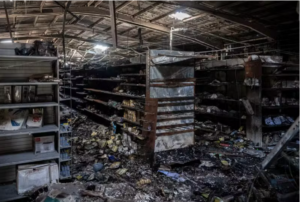
In response to escalating tensions in Martinique, the French government imposed a curfew on October 10, 2024. This curfew restricts movement between 9 p.m. and 5 a.m. across the entire island. Such a restriction of freedom reflects, above all, the severity of the unrest. Furthermore, it highlights the government’s struggle to manage the economic crisis.
In summary, the ongoing crisis has, consequently, renewed calls for long-term reforms to effectively address Martinique’s economic challenges, particularly the high cost of living. Many argue that temporary government interventions are insufficient; moreover, they emphasize the urgent need to reduce the island’s reliance on imports and foster local production. In addition, the mayor of Fort-de-France, Didier Laguerre, alongside business leaders, expresses deep concern about the impact of the violence on an already fragile economy. This economy is marked not only by a rise in business failures, but also by a drop in tourist numbers as the high season approaches. Therefore, this situation is also worrying small shopkeepers and threatens the overall stability of the island’s economy.