
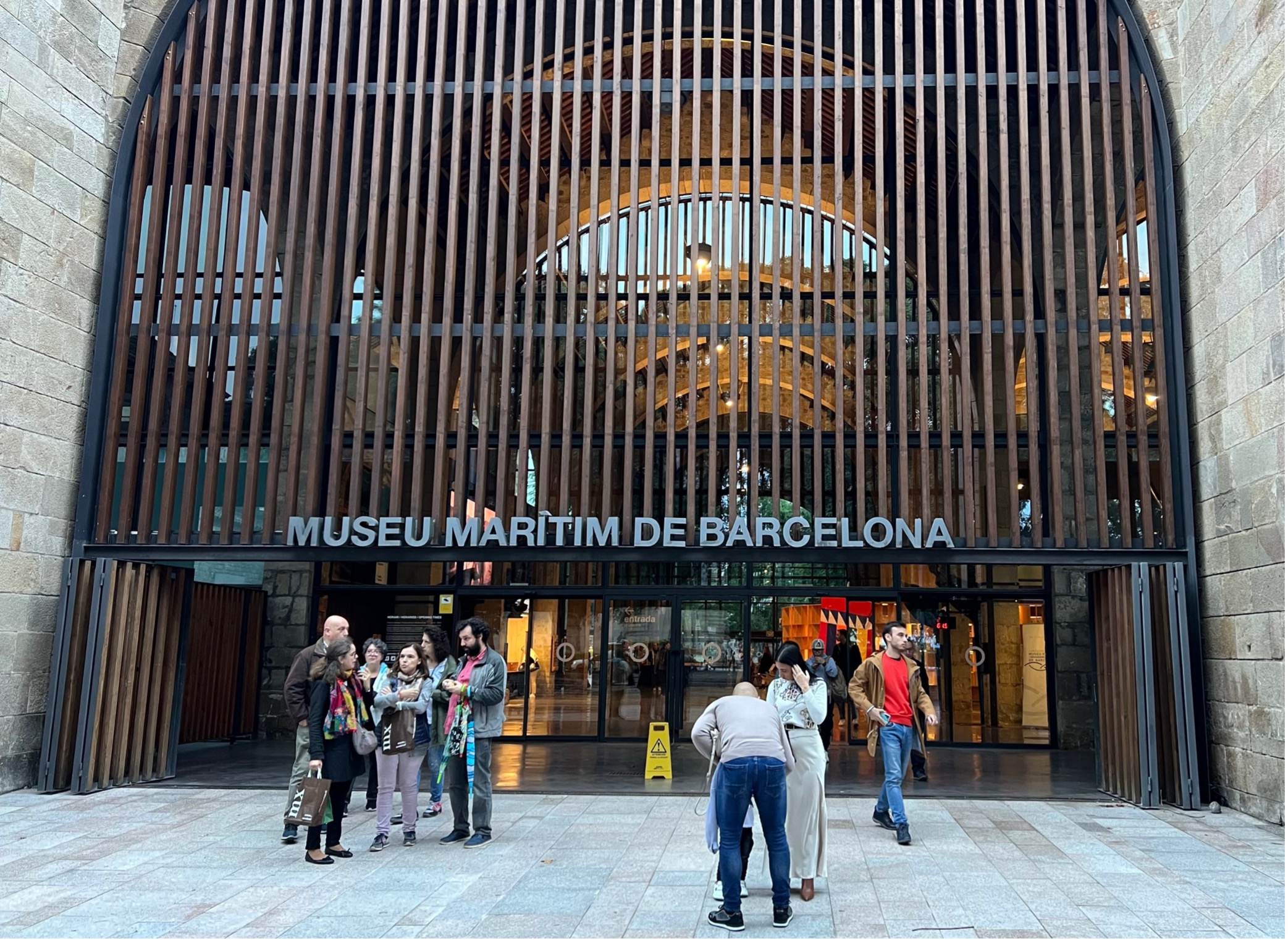
The Maritime Museum of Barcelona, a cultural gem in the city’s heart, offers visitors a captivating journey through Catalan and Mediterranean maritime history. Nestled at the foot of Montjuïc hill, in the impressive buildings of the old royal shipyard, Drassanes Reials, the museum tells the story of the region’s nautical past through a rich, diverse collection. Overall, here’s an in-depth look at this exceptional site, a true testament to the rich seafaring legacy of Barcelona and Catalonia.
A historic legacy in an iconic location
The history of the Maritime Museum of Barcelona dates back to the 13th century, when the Drassanes Reials were built as royal shipyards for constructing and repairing ships for the Crown of Aragon. Although the buildings have been renovated and modernized over the centuries, their Gothic architecture, grandeur, and historical significance remain intact. Specifically, it was in 1941 that the Drassanes were officially transformed into a museum, with a mission to preserve and promote Catalonia’s maritime heritage.
Moreover, located on Avenida de las Drassanes, close to both the Christopher Columbus monument and the bustling Port of Barcelona, this museum occupies a prime position. Thus, its location makes it a major attraction in the city, offering visitors an immersive experience into maritime history, which is closely tied to Catalonia’s identity.
A crucial role for Barcelona and its citizens
The Maritime Museum of Barcelona is much more than a simple collection of old objects. In fact, it plays a vital role in preserving and sharing the cultural heritage of the city. Since its opening, it has drawn thousands of visitors each year, including many Catalan schoolchildren who come to learn about their history and culture. Furthermore, in addition to its tourist appeal, the museum also serves as a research and educational center, contributing to the study and understanding of maritime history.
For Barcelona, the museum is a symbol of its glorious past as a maritime power. Catalonia was once a center of commerce, exploration, and adventure in the Mediterranean, and the Maritime Museum stands as a living witness to this past. Consequently, it allows visitors to understand the maritime influences that have shaped the history and development of Barcelona, through exhibitions and events that highlight both the challenges and achievements of this port city.
The Barcelona Maritime Museum’s varied collection: maps, models and iconic ships
The richness of the Maritime Museum of Barcelona lies in the diversity of its collections. Upon entering, visitors are greeted by life-sized ship displays, ancient maritime maps, and navigation instruments. Notably, the museum’s collection of maps is particularly remarkable, with some dating back to the 15th century, offering insight into how navigators of the time viewed the world. Indeed, these maps reflect the explorations and discoveries that marked the Mediterranean region’s history.
Additionally, visitors can also admire beautiful ship models, including the Galera Real, a full-sized replica of a 16th-century galleon, which serves as one of the museum’s flagship pieces. This imposing galley allows guests to understand how ships were constructed and used in great naval battles of the past. In contract, other, smaller models illustrate the evolution of shipbuilding across the ages, showcasing various styles and technological advancements.
Therefore, the museum houses several thematic rooms, each focused on different aspects of maritime life. To begin with, a central gallery examines the history and craftsmanship of the royal shipyards and their significant galleys. Moreover, another area explores Catalonia’s maritime evolution from the 18th to 20th centuries, highlighting important cultural shifts. In addition, another space brings to life the stories of great explorations that expanded the world’s known boundaries. Notably, visitors can experience an immersive video gallery where historical films showcase ships and maritime life dynamically. Furthermore, ancient navigational instruments on display illustrate the evolution of seafaring techniques. Altogether, these curated sections make the museum’s offerings engaging and accessible to all audiences.
Temporary Exhibitions: “Penelope, the Sea Belongs to You”
In addition to its permanent exhibitions, the museum also features temporary exhibits. Notably, the exhibition “Penelope, the Sea Belongs to You” which runs from June 14, 2024, to January 8, 2025. Inspired by Homer’s The Odyssey, this exhibition showcases the stories of six remarkable women in sailing. Among them are Abril Marfà, an eleven-year-old rising star, and Natàlia Via-Dufresne, a seasoned regatta champion. The exhibit also includes four activity stations to engage children with competitive sailing.
Attendance and cultural influence in Maritime Museum Barcelona
Each year, the Maritime Museum of Barcelona attracts hundreds of thousands of visitors. Its popularity continues to grow, drawing both local families and international tourists interested in discovering Catalonia’s maritime history. This success is largely due to the diversity of its exhibits and the quality of its educational activities. Moreover, workshops and guided tours provided by the museum allow young generations to engage with their region’s history in an interactive and dynamic way.
Thus, the Maritime Museum of Barcelona is much more than a place of preservation; it is a lively center where history, culture, and education come together. With its unique collections and historical setting, it invites visitors to discover and reflect on the impact of the seas and oceans on our past and future. For Barcelona, it represents a true source of pride and a vibrant testament to its maritime identity.