
Today, regenerative agriculture is at a crucial turning point. For several decades, the intensification of conventional farming methods has led to increased yields; however, this progress has come at a significant environmental and social cost. As a result, issues such as soil erosion, growing dependence on chemical inputs, and the alarming loss of biodiversity have emerged as by-products of an approach that disregards natural cycles. In response to these challenges, regenerative agriculture is increasingly viewed as an alternative solution, one that is not only viable but also potentially transformative across all types of agricultural production. This approach goes beyond simply addressing today’s ecological issues; it also aims to alleviate the growing frustration and disillusionment among farmers facing mounting pressures.
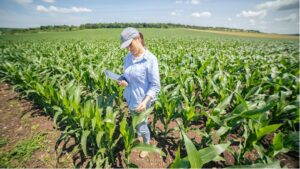
“Nature has been very kind so far” says Juliana Jaramillo, Rainforest Alliance agriculture expert
Innovative solutions: crop rotation, regenerative grazing and agroforestry
Farmers are increasingly under pressure due to soil degradation, rising chemical dependency, and tightening regulatory constraints. Although the new agricultural policy law is intended to support the agro-ecological transition, it is often perceived as an additional burden, lacking sufficient support measures. Since the post-war era, industrial agriculture, grounded in the intensive application of chemical fertilizers, has progressively degraded soils, reducing their natural fertility. Consequently, ever-larger inputs are now required to produce the same amount of cereal crops as in 1960. Furthermore, Inserm has established a clear link between pesticide use and various public health issues, adding to the urgency of these challenges.
Need for political support to encourage sustainable agriculture practices
In response to these challenges, regenerative agriculture is gaining attention as an innovative solution. Building on practices like crop rotation, regenerative grazing, and agroforestry, this approach seeks to restore soil health while decreasing reliance on chemical inputs. International initiatives, such as the Regenerative Organic Alliance, along with French organizations like the National Federation of Organic Farming, are actively promoting these methods, which offer substantial benefits in terms of yield and sustainability. To further support these practices, policies focused on reducing food waste and promoting local distribution networks are essential. Additionally, measures such as composting programs and an incentive system for waste sorting could be implemented to strengthen sustainability efforts.
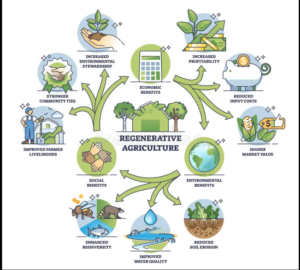
In conclusion, although regenerative agriculture demands significant efforts in terms of training and funding, it presents a highly promising alternative to conventional practices. By actively promoting soil health and reducing environmental impacts, this approach has the potential to signal a decisive shift in agriculture, paving the way for a future that is both more sustainable and more equitable.