
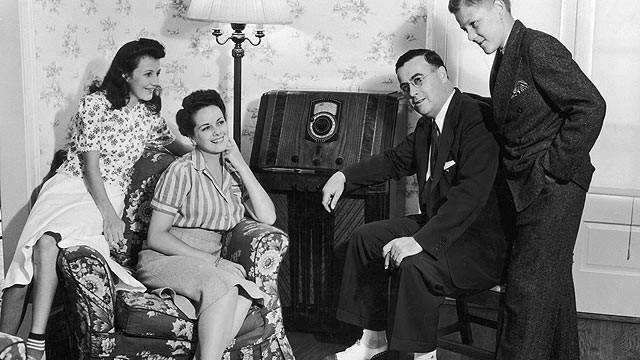
For over a century, radio has been a resilient medium, constantly adapting to technological revolutions while maintaining its core identity: live broadcasting. Often called the “blind media” for its ability to activate imagination through voice, sound, music, and silence, radio has consistently adapted and reinvented itself throughout its history. This way the medium managed to survive constant technological changes.
The birth of Radio Barcelona on November 14, 1924, quickly revolutionized the Spanish society. Due to the high levels of illiteracy in Spain, radio became a paradigmatic media for informing and entertaining people. However, due to its high economic cost, many people began to build their own radio receivers (e.g. Crystal Radio). As follows, it became a popular phenomenon with a great democratic vocation, accessible to anyone, regardless of socioeconomic status.
Later, the change from Amplitude Modulation (AM) to Medium Frequency Modulation (FM) brought about a significant improvement in the quality of the transmission and reception system. As a consequence, radio acquired the ability to offer a wider variety of content. This led to a focus on music and achieving connecting with younger audiences, especially during the 1980s and 1990s.
Internet changed the radio century
With the rise of the internet, radio became even more global. Now, someone in Catalonia can listen to radio stations in New York, broadening its reach. However, sources of reference like the EGM (Estudio General de Medios) show that both listener numbers and the time spent listening have been declining in the last years. Above all, this occurs particularly among young generations, above all since the podcasting boom.

Last but not least, despite these challenges, radio remains vital after a century thanks to ability to inform, accompany, entertain, transmit values and shape opinions. Its essential service and democratic power continue to be core strengths. As it has done many times before, radio will likely need to evolve again, finding new ways to remain relevant and competitive towards modern media trends.
📻 #LocxsPorLaRadio | Hora 25 ha conectado con el Hotel Colón, desde donde Radio Barcelona empezó a emitir por primera vez hace 100 años#100AñosSER https://t.co/0ZW2rLTzI0 pic.twitter.com/fvHGJASSQt
— Cadena SER (@La_SER) October 15, 2024