
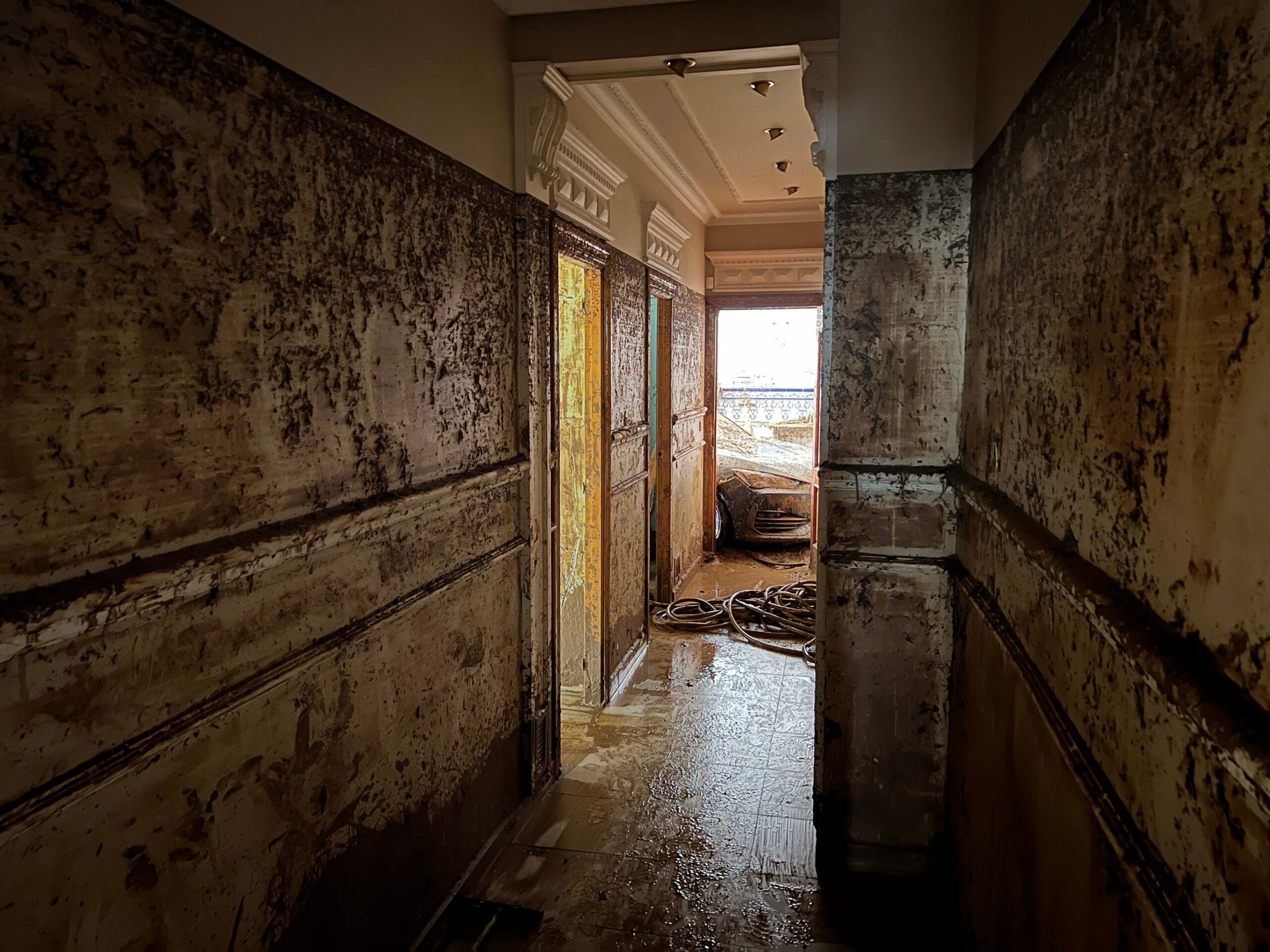
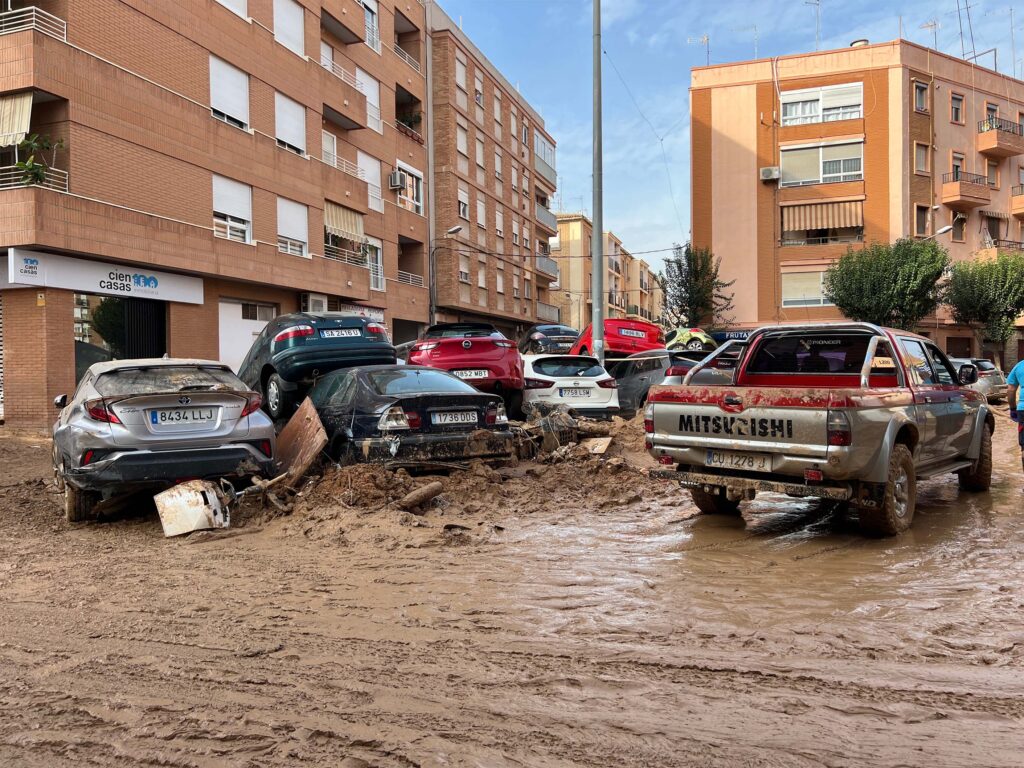
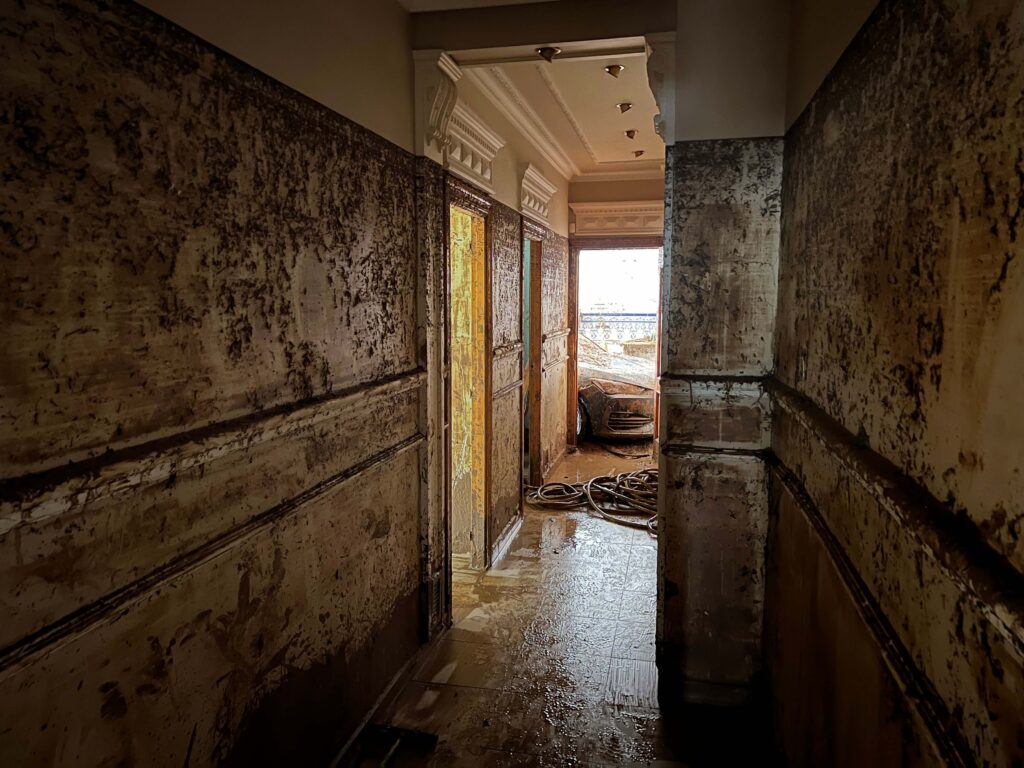
The pass of the DANA through Valencia has left the outskirts filled with mud and water. It has also destroyed many roads and bridges. The situation has been very chaotic from the very beginning. But the volunteers cover the government mistakes now, but foremost, the first days. The catastrophic alarm didn’t go off soon enough. Many where cought in the middle of their day and didn’t have time to go back home safely. The aftermath was apocalypictic. Hundreds of people died, some trapped and asfixiated in their own cars and some others swept away in the currents, that were over two meters tall. Those who were lucky and survived suffered severe inundations in their lower floors, which are very typical in those neighbourhoods.
Since then, the government has been underwhelming, to say the least. Help was slow and disorganized. It’s not that they are uncapable, spain has some incredible first responders, but their hands were tied, they couldn’t do much. But people did. A ocean of people from all around Spain started coming to Valencia, their cars filled with basic first need stuff and their hearts on the other hand, filled with desire to help. The first days were the ones were people made the biggest difference, they gave hope to the locals, taking water out with brooms and shoveling mud away. Volunteers covered the disorganization of the government.
Shame from the local government
It seems that there is a false narrative going on. The spanish press accentuates that the situation is better. The police says to the volunteers to turn back, that their help is not needed. But the moment I stepped foot in Utiel, five days after the DANA, I saw that it wasn’t the case. Even if Utiel is 90 kilometers away from the most devastated zones, the water and mud were still present in the streets, and they still needed to clean most of their homes or their principal avenue. This populations at the start of the river were whipped pretty bad, and were left abandoned for the first days. Luckily they asked for help in social media and quite a lot of people came, and left it in a passable state.
People from Utiel told me, as they told many volunteers before me, to go help other villages that might be worse than them, an altruist proposal. So it began a devastating roadtrip. The roads were in their majority very clean. But the roadside was a diferent story. Sheets of metal hugged the trees that still standed, showing the force that the flash flood must have had. I only encountered one closed road, impossible to pass, as a tree of more than 30 meters had fallen and broken the road and all of its surroundings. Still, I kept going from village to village, but all of them, even if they had their fair share of problems, asked me to go to their neighbour villages, wich I obliged to.
Is it easy to help?
After trying to help in some other villages I found myself very close to Valencia, and decided to enter, as it seemed that it was the population with most needs. It was a very unpleasant drive. I was stuck more than two hours in traffic, with fellow volunteers, even some Red Cross vans. Finally I was able to enter Alfafar, wich it’s very important to understand that it’s not the norm, most people is rejected by the police and told to go back. I was lucky enough that the police that controlled the roundabout was overwhelmed, and allowed me to enter, as I had first need necesities. I was probably one of the last civilians with no affiliation to any ONG that they let through, beacouse as I understood, that evening they reinforced control. So, helping in Valencia is not an easy thing, and it’s getting harder by the moment.
Inside Alfafar some destroyed corner shops distributed free food to the locals. They had so much help in the first days, all from volunteers, that they had too much stock, and rejected part of my shippment. I have never been so happy to be rejected this many times. The more you see of Alfafar streets the more beautiful it gets. Neighbours working together to scoop out the water from the insides of their homes or garages. Young people from all over Valencia helping clean the streets. And common people guiding and telling fireman and water pump trucks where to go. There where also farmers with big tractors moving debris to garbage trucks. A task of immesurable importance and impossible to achive with shovels.
How do volunteers cover the government chaos?
After 5 days you could see a few army people roaming without much knowledge of what to do. Also a lot of police that only restricted traffic and gave orders in the street, but they didn’t get dirty. At least firefighters helped more directly and effectively than the others. But yet again volunteers are helping quite a lot more thanks to not having burocracy involved. The spaces or tasks that the government wavers, volunteers pick up the role of covering it, thanks to mass comunication through social media or direct channels like whatsapp or telegram. It might not be the most organized, but it gets people in there. Better to have a hundred hands than cero.
So basically the new communication platforms and the good will of people has helped locals fight against a situation, that clearly would have gotten out of control if only institutionalized forces had helped. It is an absolutely disgrace the slow and ineffective work that the authorities have carried out. It’s great to see that after more than 10 days it’s starting to look better for Valencians, and the help that is needed from the state is slowly coming. Still we should not forget that it wouldn’t be this good if thousands of volunteers hadn’t came the first days. It’s a pity that police centered their strenght in diverting help from civilians to the affected zones, although it’s understendable that not everyone fits, rejecting all help it’s counterproducting for people in need.