
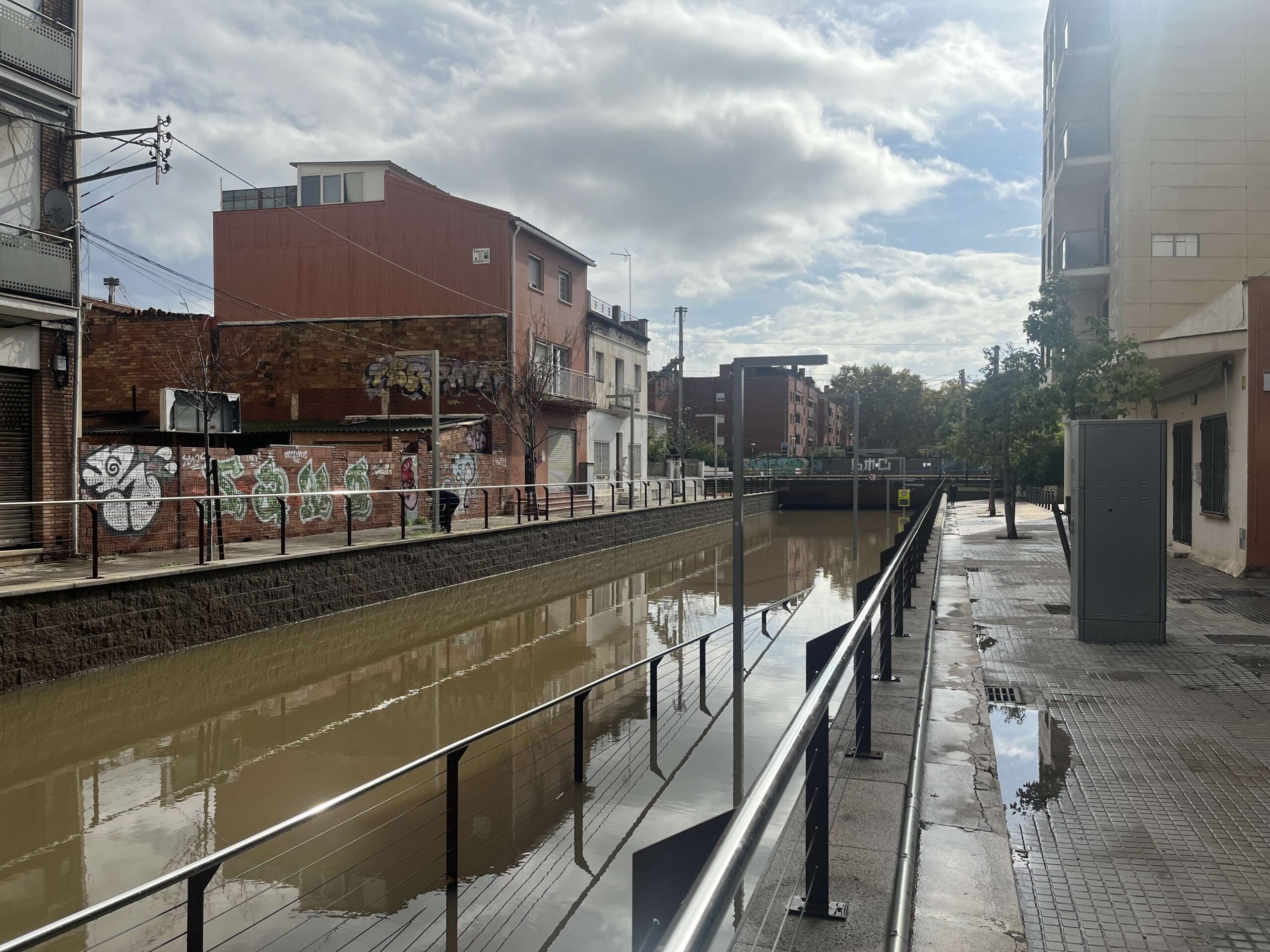
On Monday, November 4, Castelldefels experienced a day marked by heavy storms and torrential rains that battered the Catalan coast as a consequence of DANA. This weather phenomenon, a result of a disturbance in the Mediterranean, left images of flooded streets and collapsed traffic. The storm began in the early morning and continued well into the afternoon, with gusts of wind, lightning strikes, and a significant amount of rainfall in a short period, which put drainage systems to the test and mobilized emergency services.
With all the things happening right now in Valencia, the alarms around Spain are turning on quickly as the country doesn’t want to cry another catastrophe in less than a week. All eyes are in Valencia but Spain in general is facing tough weeks battling with storms.
Meteorological Context of the Storm in Castelldefels
Monday’s storm was the result of a low-pressure system over the western Mediterranean, encountering with a cooler air mass at altitude, perfect conditions for storms. This type of weather situation, or “Isolated High-Altitude Depression” (DANA). Castelldefels, like other towns along the Barcelona coast, was affected by the DANA, with accumulated precipitation exceeding 50 mm in some areas, according to reports from the State Meteorological Agency (AEMET).
The intensity of the rains was such that Castelldefels urban drainage systems were quickly overwhelmed, resulting in the collapse of several main streets and avenues. Local authorities had to deploy emergency operations to control the most affected areas and provide support to citizens, while official recommendations advised against unnecessary travel. The storms also caused an increase in the level of nearby streams and creeks, raising concerns about possible overflows that could impact residential and commercial areas.
Impact on the Population
The storms not only created disruptions in the daily lives of Castelldefels residents but also caused interruptions to essential services. In several areas of the town, power outages were reported due to lightning strikes, leaving hundreds of households without electricity for several hours. Additionally, public transport services were affected; water accumulation on the tracks prevented trains and buses from operating in certain sections, forcing passengers to find alternative routes.
Firefighters and civil protection teams worked tirelessly to respond to emergency calls and evacuate people trapped in vehicles or flooded basements. It is estimated that more than 100 emergency calls were made in the region within just a few hours, highlighting the storm’s magnitude and its impact on the city’s infrastructure. Firefighters used water extraction pumps in the most flooded areas, especially in areas near the beach and low-lying areas where water accumulated more easily.
The trend toward more intense and frequent storms has sparked debates on the need to improve urban infrastructure and adapt drainage systems to adequately respond to torrential rains. Authorities have emphasized the importance of following recommendations and acting quickly in response to alerts for phenomenons like DANA.
Emergency Services
During the storm, Castelldefels police and firefighting teams played a crucial role in maintaining safety and order across the town. Firefighters were on high alert, responding swiftly to emergency calls about flooded basements, blocked roads, and minor landslides. Equipped with water pumps and specialized vehicles, they managed to clear water from key areas and assist residents trapped in vehicles or ground-floor buildings. The local police, meanwhile, coordinated traffic diversions to prevent cars from entering flooded zones and patrolled affected areas to ensure the public’s safety. Their efforts included providing updates to residents and coordinating with other emergency services to manage the most critical situations effectively. Thanks to the coordinated work, many residents felt reassured during the storm’s peak, knowing that help was readily available if needed.