
Writed by Jordi Vizuete, Leonie Asam, Ferran López

One hundred days after the devastating DANA (Isolated Depression at High Levels) that struck the Valencian Community, the response and aid distribution from the Spanish government remain under intense scrutiny. Despite initial promises of swift support after the DANA, administrative inefficiencies and political tensions have left many affected residents frustrated and without the assistance they urgently need.
The slow processing of DANA-related aid applications has fueled tensions between regional and central government authorities. Moreover, affected residents have criticized the lack of transparency and efficiency, demanding faster responses and clearer communication regarding the status of their DANA claims. In addition, bureaucratic delays have only deepened public dissatisfaction, highlighting gaps in the current disaster response framework for DANA emergencies.
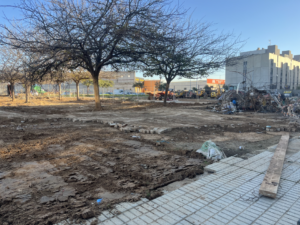
Spanish Prime Minister Pedro Sánchez pledged comprehensive support to those impacted by the DANA, emphasizing that all necessary measures would be taken. However, he also cautioned that the DANA flooding was still ongoing at the time of his statement. Notably, the DANA has been described as the worst flood event in Spain since 1996, when 87 people perished in Biescas, and in comparison to the 2021 floods in Germany and Belgium, which claimed over 200 lives.
Both Sánchez’s government and the regional administration, led by Carlos Mazón, have faced accusations of failing to provide timely warnings about the DANA. Consequently, in several affected areas, DANA-related government aid did not arrive for days, sparking widespread outrage. The situation reached a boiling point on November 9, when over 100,000 people took to the streets in Valencia, demanding Mazón’s resignation. Although Mazón apologized for the “mistakes” made in the immediate aftermath of the DANA, he refused to step down; instead, he shifted the blame to the national government for providing inadequate and delayed information.
The Valencian region suffered the heaviest toll from the DANA, with 222 of the 230 fatalities occurring there. Furthermore, the DANA floods caused extensive material damages, and 28 municipalities remain under a state of emergency. Specifically, the DANA delivered up to 500 liters of rain per square meter, an amount equivalent to a full year’s rainfall in Spain.
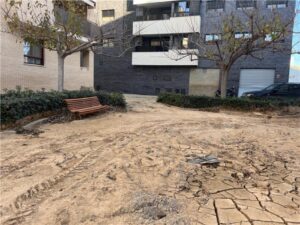
In response to delays at the national level regarding DANA aid, President Mazón announced an emergency decree allocating €250 million. This funding, which is compatible with other government assistance, aims to guarantee a minimum of €6,000 per affected
La dana 100 días después: las comisiones del Senado y Les Corts preguntarán a Polo por el “apagón informativo” https://t.co/oEToZAemDU
— EL ESPAÑOL (@elespanolcom) February 6, 2025
The failed DANA aid
Out of the €16.6 billion in aid initially promised, only approximately €2 billion have been disbursed. This represents just one-eighth of the total committed funds. A total of 377,439 aid applications were submitted, yet less than half—185,411—have been processed. Specifically, for damages to homes and personal belongings, only €53.1 million have been allocated, benefiting 2,620 families despite 42,056 pending applications in this category.